Stop Undervaluing Your Skills: A Complete Pricing Guide for Video Editors
One of the biggest challenges new video editors face isn’t learning Premiere Pro or DaVinci Resolve—it’s deciding what to charge.
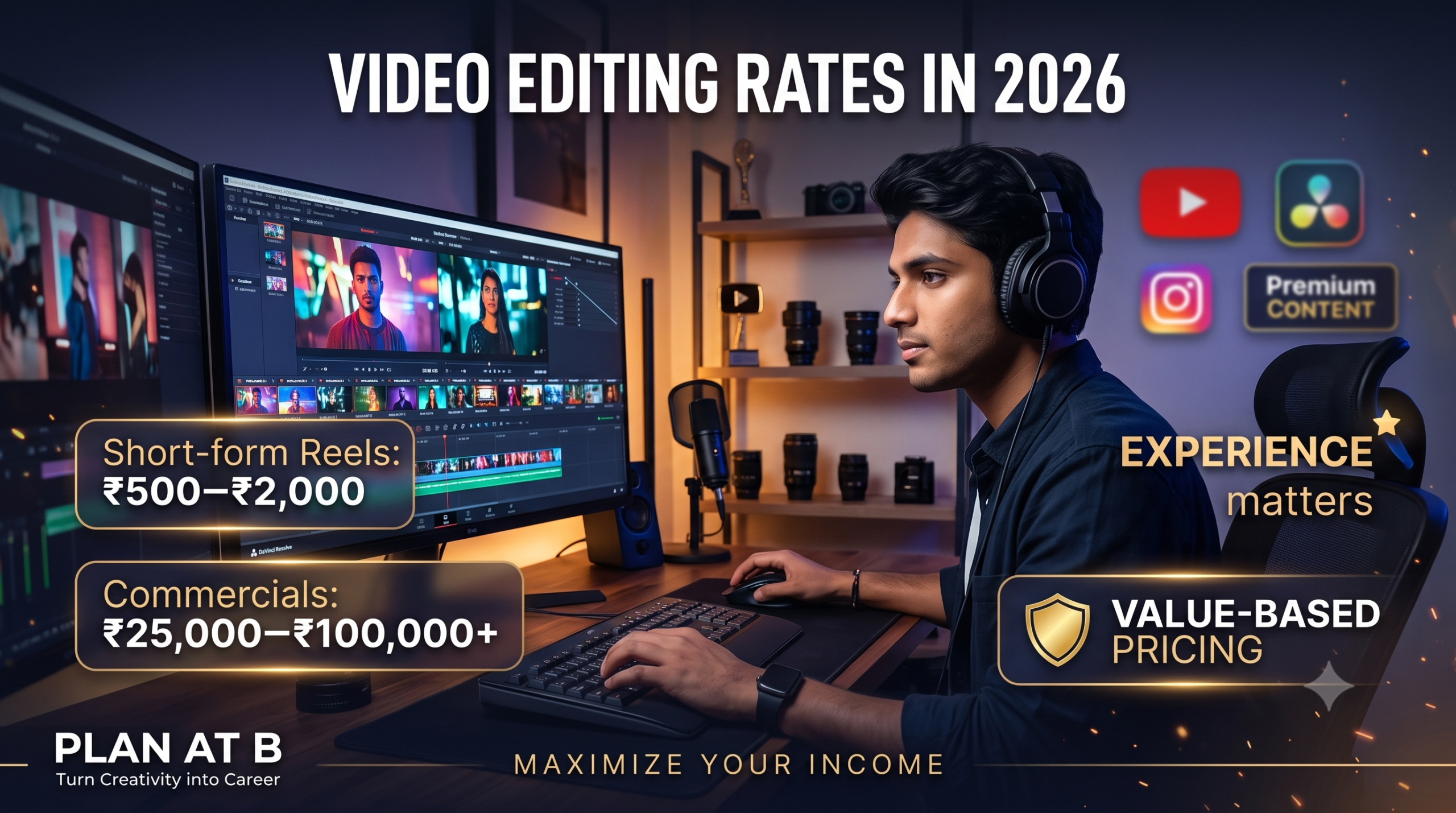
Ask ten editors how much they charge, and you’ll probably get ten different answers. Some charge ₹500 for a reel, while others earn ₹15,000 for the same type of project. So, who’s right?
The truth is, there’s no universal pricing formula. Your rates should reflect your experience, skills, turnaround time, project complexity, and the value you bring to clients—not just the number of hours you spend editing.
As video content continues to dominate platforms like YouTube, Instagram, TikTok, and LinkedIn in 2026, skilled editors are in higher demand than ever. Businesses, creators, and brands understand that quality editing directly impacts engagement and sales, making professional editors a valuable investment.
Let’s explore how much you should realistically charge in 2026.
Factors That Determine Your Editing Rates
Before setting your price, evaluate these key factors:
- Experience Level: Beginners naturally charge less than editors with proven portfolios.
- Project Complexity: Simple cuts cost less than videos requiring motion graphics, VFX, color grading, or advanced sound design.
- Turnaround Time: Rush projects deserve premium pricing.
- Client Type: A multinational company typically has a larger budget than an individual content creator.
- Deliverables: One video differs significantly from a package of multiple videos with revisions.
The more value you provide, the higher your rates can be.
Average Video Editing Rates in 2026
While pricing varies globally, these ranges provide a good benchmark.
Beginner Editors (0–1 Year)
- Short-form Reels: ₹800–₹2,500 per video
- YouTube Videos: ₹2,000–₹5,000
- Hourly Rate: ₹500–₹1,200
At this stage, focus on building a strong portfolio rather than chasing high-paying clients.
Intermediate Editors (1–3 Years)
- Short-form Content: ₹2,500–₹7,000
- YouTube Videos: ₹5,000–₹15,000
- Commercial Projects: ₹15,000–₹40,000
- Hourly Rate: ₹1,200–₹3,000
Editors in this category often specialize in niches such as podcasts, real estate, gaming, fitness, or corporate videos.
Professional Editors (3+ Years)
- Brand Commercials: ₹40,000–₹200,000+
- YouTube Channels: ₹15,000–₹50,000 per video
- Documentary or Corporate Films: ₹50,000–₹500,000+
- Hourly Rate: ₹3,000–₹8,000+
At this level, clients aren’t paying just for editing—they’re paying for storytelling, creativity, reliability, and business results.
Should You Charge Hourly or Per Project?
Both pricing models have advantages.
Hourly pricing works well when project requirements aren’t fully defined or when clients frequently request changes.
Project-based pricing is generally preferred because it rewards efficiency. If you complete a project faster thanks to your expertise, your earnings don’t decrease.
Many experienced freelancers also offer monthly retainers, where clients pay a fixed fee for a certain number of videos each month. This creates consistent income while providing clients with predictable costs.
Don’t Forget Hidden Costs
Many beginners calculate only the time spent editing. However, professional editing involves much more.
Consider expenses like the following:
- High-performance computers
- Editing software subscriptions
- Stock footage and music licenses
- Cloud storage
- Internet costs
- Skill development and online courses
- Taxes and business expenses
Your pricing should cover these investments while still generating a healthy profit.
The Biggest Pricing Mistakes New Editors Make
Many talented editors struggle financially because they make common pricing mistakes.
The biggest ones include:
- Charging too little to attract clients
- Copying someone else’s rates without considering their experience
- Offering unlimited revisions
- Not using contracts
- Working without receiving an advance payment
- Ignoring the actual business value of their work
Remember, a well-edited video can generate thousands—or even millions—of views, leads, and sales for a client. You’re not simply editing clips; you’re helping businesses communicate effectively and grow.
How to Increase Your Rates
If you want to charge more in 2026, don’t rely solely on experience. Focus on becoming more valuable.
Build a professional portfolio.
Choose a niche instead of editing everything.
Learn motion graphics, color grading, sound design, and AI-powered editing workflows.
Improve communication and client management skills.
Most importantly, deliver projects on time and consistently exceed expectations. Happy clients often become repeat clients—and they’re far more likely to accept higher rates.
Final Thoughts
There will always be editors willing to work for less. Competing on price alone is rarely a winning strategy.
Instead, compete on quality, reliability, creativity, and professionalism.
As your skills improve and your portfolio grows, your pricing should grow too. Don’t be afraid to increase your rates when you consistently deliver exceptional results.
Remember: clients hire editors because they want results—not just someone who knows how to use editing software.
Ready to Build a High-Paying Video Editing Career?
At Plan At B, we don’t just teach you how to edit videos—we teach you how to build a sustainable career around your skills. Learn industry-standard software, create a portfolio that attracts premium clients, understand freelancing, and gain the confidence to charge what you’re truly worth.
Start your journey with Plan At B today and turn your creativity into a profitable profession.