If you’ve ever searched “How long does it take to learn video editing?” you’ve probably seen answers like “30 days,” “Learn in a week,” or “Become a pro in 90 days.”
But the truth? There isn’t a single timeline that works for everyone. The timeline varies person to person.
Learning video editing isn’t about memorizing buttons in Adobe Premiere Pro, DaVinci Resolve, or Cap Cut. It’s about developing an eye for storytelling, pacing, emotion, and audience engagement. Some people learn the basics in a few weeks, while others spend years refining their craft.
The good news is that you don’t need years to start earning from video editing. With consistent practice and the right guidance, you can build practical skills much faster than you might think.
In this blog, we’ll break down a realistic learning timeline and explain what matters if your goal is to become a confident video editor.
Month 1: Learning the Basics
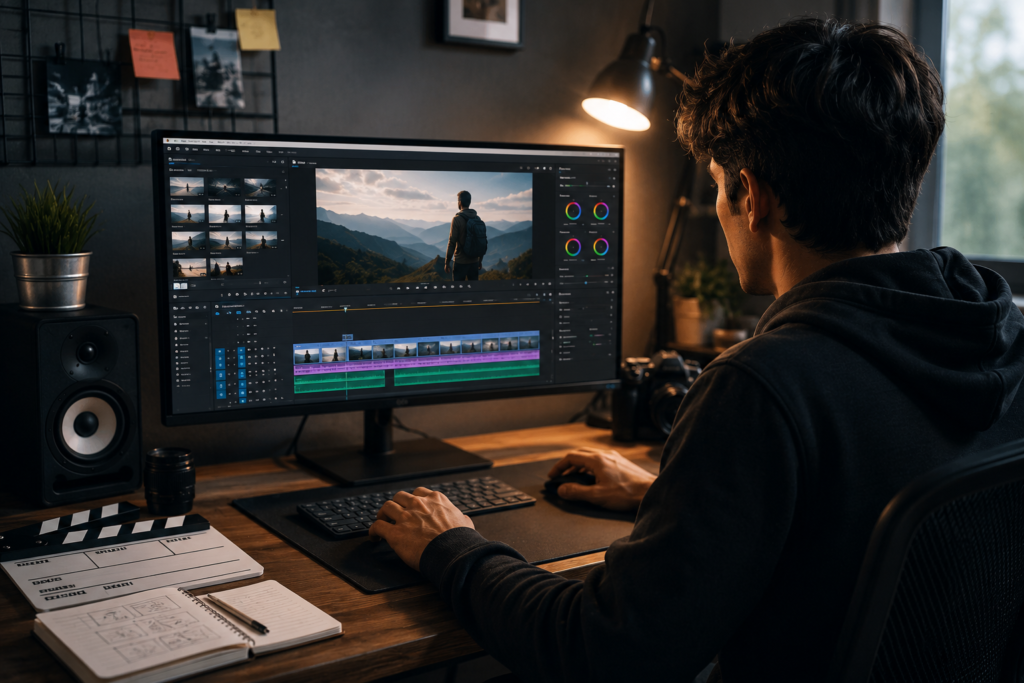
The first month is all about becoming comfortable with your editing software. And you’ll learn how to:
- Import and organize footage
- Cut and trim clips
- Add transitions
- Adjust audio levels
- Insert text and titles
- Export videos in different formats
At this stage, your videos won’t look cinematic, and that’s perfectly normal. Here, your focus should be on understanding the editing workflow rather than creating perfect content.
Goal: Edit simple videos confidently without constantly searching for tutorials.
Months 2–3: Building Real Editing Skills
This is where many beginners begin to see noticeable improvement. You’ll start understanding how storytelling is done through editing; you will get to know about timing and pacing, music synchronization, color correction basics, motion graphics, B-roll placement, and sound design.
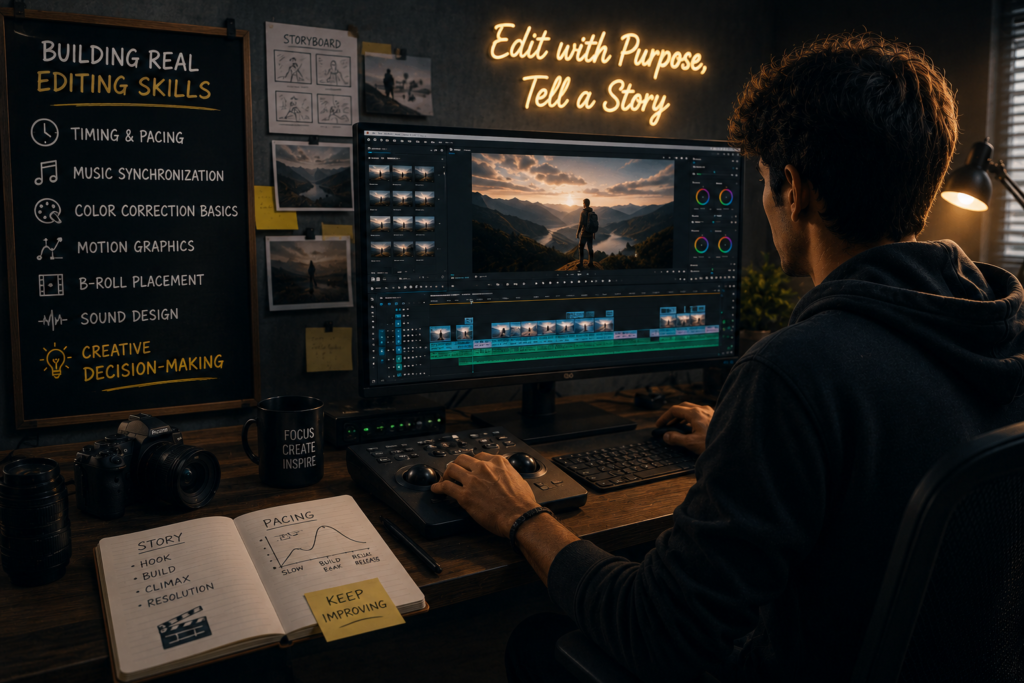
You’ll also start noticing the difference between a video that simply shares information and one that keeps viewers watching until the end. This stage is less about software and more about creative decision-making.
Months 4–6: Working Like a Professional
After a few months of consistent practice, you’ll be ready to take on real-world projects. And instead of asking:
“How do I use this tool?” You’ll start asking, “How can I make this video more engaging?”
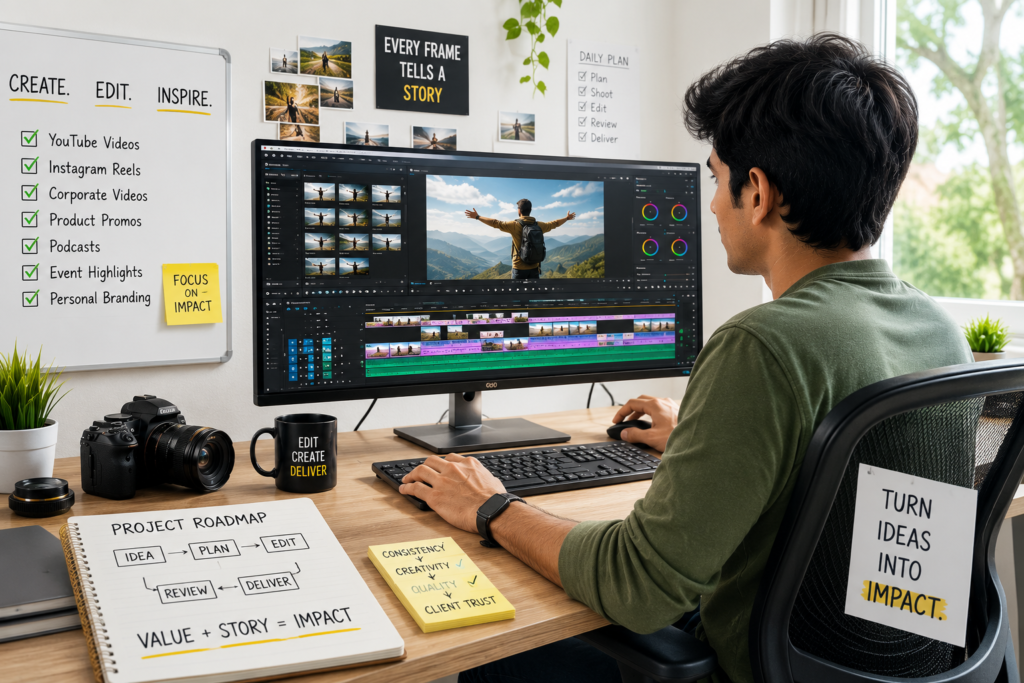
At this point, you’ll be able to edit the YouTube videos, Instagram Reels, corporate videos, product promos, podcasts, event highlights, and personal branding content. This is also when many aspiring editors start freelancing or working with clients.
What Actually Determines How Fast You Learn?
The biggest factor isn’t talent. It’s consistency. Someone who edits for one hour every day will usually progress much faster than someone who watches tutorials for hours but rarely practices. Here are four factors that significantly influence your learning speed:
1. Practice Over Tutorials
Watching editing videos can be helpful, but editing your own projects is where real learning happens. Every timeline, mistake, and revision teaches something new.
2. Learn Through Real Projects
Editing travel vlogs, podcasts, interviews, promotional videos, or short films exposes you to different editing challenges. The more variety you experience, the faster your skills grow.
3. Constructive Feedback
Many beginners improve slowly because no one reviews their work. Receiving feedback from mentors or experienced editors helps you identify mistakes you might never notice on your own.
4. Understanding Storytelling
Great editors don’t just cut clips. They guide emotions. Every transition, sound effect, zoom, pause, and music choice should support the story. That’s what separates an average editor from a memorable one.
The Biggest Mistake Beginners Make
Many new editors spend months trying to master every tool inside their editing software. The reality is that professional editors use only a small percentage of available features for most projects.
Clients rarely ask, “Which software did you use?”
Instead, they ask:
- Does the video keep people engaged?
- Does it represent our brand?
- Does it achieve our business goals?
The outcome matters more than the software.
Can You Learn Video Editing in Six Months?
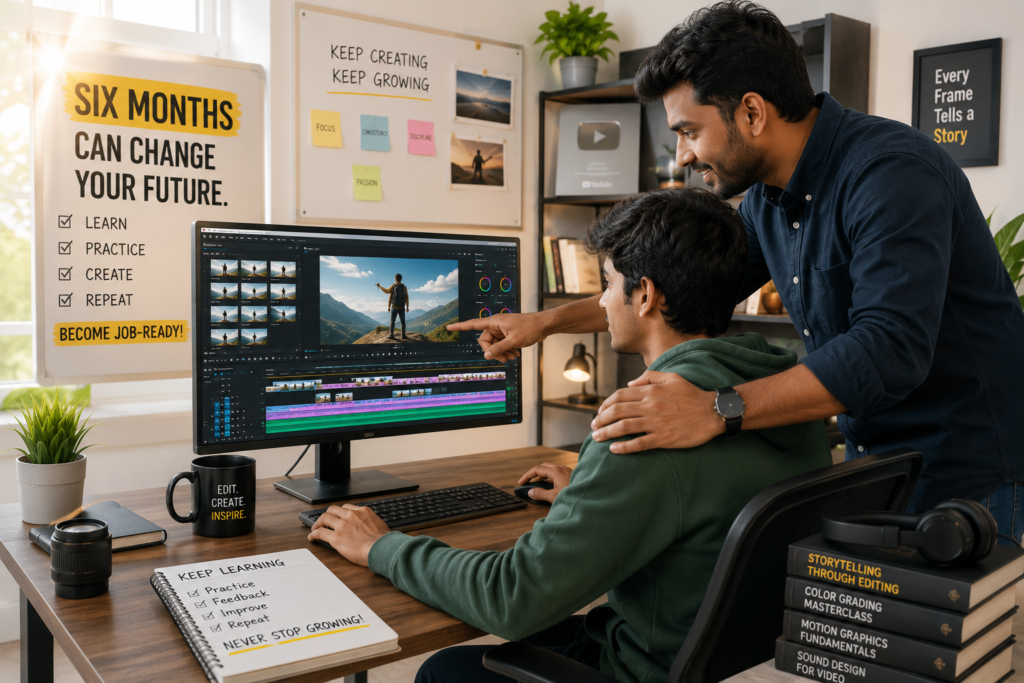
Absolutely. If you’re practicing consistently, working on real projects, and learning from experienced mentors, six months is enough to become job-ready for many editing roles.
Of course, learning never truly stops. Even experienced editors continue exploring new techniques, AI-powered editing tools, motion graphics, and storytelling trends.
Video editing is an evolving skill and that’s what makes it exciting.
Focus on Progress, Not Perfection
The best editors weren’t born with exceptional editing skills. They became great by editing hundreds of videos, making mistakes, and improving one project at a time.
Every successful editor has gone through awkward cuts, poor transitions, audio mistakes, and countless revisions. The difference is that they kept creating.
If you commit to consistent practice, stay curious, and build real projects instead of chasing shortcuts, you’ll be surprised by how much you can achieve in just a few months.
Start Building Your Editing Career with Plan At B
At Plan At B, we believe that the fastest way to learn video editing isn’t by watching endless tutorials; it’s by working on practical projects that reflect real client expectations.
Our training is designed to help you build confidence, develop a professional portfolio, and understand the creative thinking behind every great edit. Whether you’re aiming to freelance, land a full-time job, or create standout content for your own brand, you’ll learn the skills that employers and clients value.
Don’t wait for the “perfect time” to start. Every great editor began with a single cut.
Ready to turn your creativity into a career? Join Plan At B today and start editing videos that people love to watch—and clients are happy to pay for.