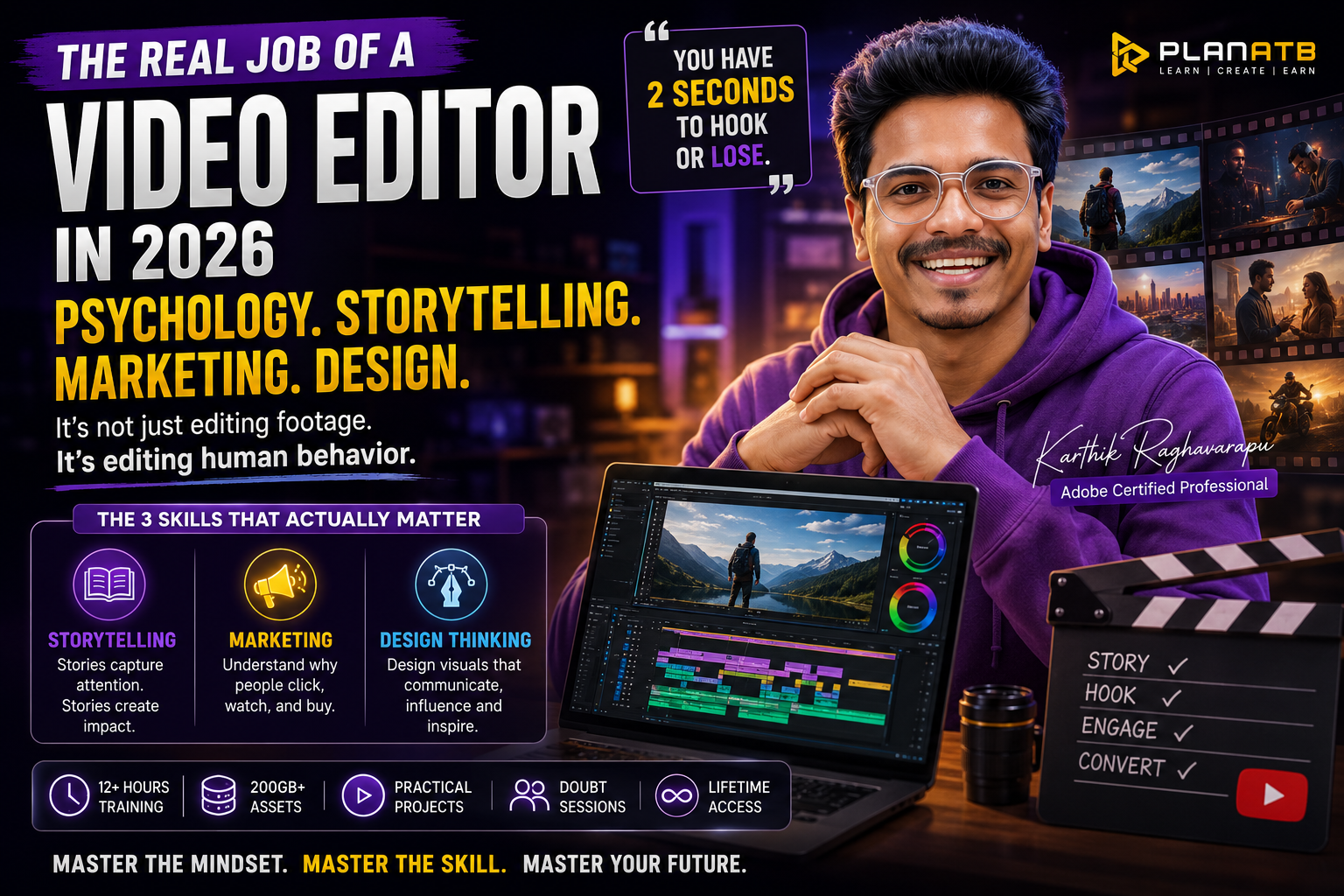
A decade ago, video editing was all about cutting clips, but in the current age, it’s about controlling attention. Every second, millions of videos compete for the same audience. Brands are fighting for engagement. Creators are fighting for views. Businesses are fighting for visibility.
That’s where video editing has come.
And in the middle of that battle stands the modern video editor. If you’re thinking about becoming a professional video editor in 2026, here’s something nobody tells you:
The people earning the most aren’t necessarily the best editors, but they’re the best storytellers.
The Biggest Myth About Video Editing
Most beginners think their journey starts with software where they spend months learning every button in Premiere Pro. They memorize shortcuts. They watch endless tutorials on transitions. Then they wonder why they are not getting hired anywhere.
Because clients don’t pay for transitions; rather, they pay for the good results.
A business owner doesn’t care how many effects you know. They care whether their video:
- Gets more views
- Generates leads
- Builds trust
- Sells products
- Keeps people watching
That’s why agencies like Plan At B approach video editing differently.
The question isn’t “How do we edit this video?” The question is: “What should this video make people do?”
That’s the mindset shift that separates hobbyists from professionals.
Your real job is psychology.
Think about your own scrolling habits. You open Instagram and a video appears within two seconds; you’ve already decided whether to keep watching it or not. Now imagine being the person responsible for those two seconds.
That’s what modern video editing is. Every cut, every zoom, every caption, every sound effect they’re all psychological tools designed to hold attention. Professional editors aren’t just editing footage.
They’re editing human behavior.
Learn the Three Skills That Actually Matter
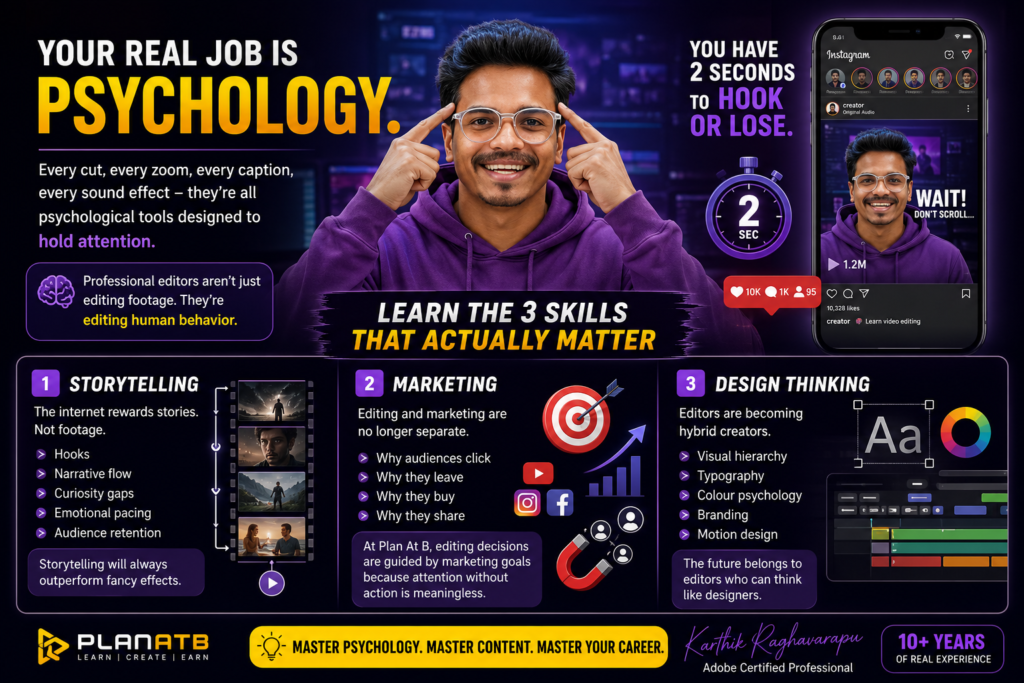
Most people focus on technical skills. The best editors focus on three completely different things:
1. Storytelling
The internet rewards stories. Not footage. You can shoot a video on a phone and get millions of views if the story is compelling. But even expensive footage becomes useless without structure.
Learn:
- Hooks
- Narrative flow
- Curiosity gaps
- Emotional pacing
- Audience retention
Storytelling will always outperform fancy effects.
2. Marketing
This is where most editors fall behind. In 2026, editing and marketing are no longer separate skills. A great editor understands:
- Why audiences click
- Why they leave
- Why they buy
- Why they share
At Plan At B, editing decisions are often guided by marketing goals before creative choices are made. Because attention without action is meaningless.
3. Design Thinking
Modern video editors are becoming hybrid creators. They understand:
- Visual hierarchy
- Typography
- Colour psychology
- Branding
- Motion design
The future belongs to editors who can think like designers.
AI Is Changing Everything (And That’s Good News)
Many aspiring editors worry that AI will replace them, but what’s happening is exactly the opposite. AI is replacing repetitive tasks. Not creativity.
Software can now:
- Remove silences
- Generate captions
- Organize footage
- Suggest cuts
But AI still can’t understand the following:
- Human emotion
- Brand personality
- Cultural relevance
- Storytelling nuance
The editors who thrive in 2026 won’t compete with AI. They’ll collaborate with it. The smartest creators are becoming creative directors rather than just software operators.
Build a Portfolio Before You Feel Ready
Most people wait. Professionals publish. One of the fastest ways to grow is by creating projects before anyone pays you.
Create:
- Reels
- YouTube edits
- Mock advertisements
- Travel videos
- Documentary-style content
- Personal storytelling projects
Your first videos won’t be perfect but will be good. Perfection is the enemy of progress. Every successful editor has a folder full of terrible early work. The difference is they kept going.
The New Career Path Nobody Talks About
In 2026, the highest-paying editing jobs aren’t always in film studios. They’re in content ecosystems.
Brands now need:
- Reels editors
- Podcast editors
- YouTube editors
- Content repurposing specialists
- Motion graphic editors
- Creative strategists
This shift has created opportunities that didn’t exist five years ago. Businesses need people who understand content, not just software.
That’s exactly why agencies like Plan At B invest heavily in strategic editing workflows—because every piece of content now plays a role in a larger digital growth system.
Think Beyond Editing
Here’s the secret: the future doesn’t belong to video editors. It belongs to people who can solve communication problems using video. That’s a very different skill.
Anyone can learn software, but there are very few people who learn:
- Audience psychology
- Content strategy
- Brand storytelling
- Attention economics
Those skills make you irreplaceable.
Final Thoughts: Become a Creator, Not Just an Editor
If you’re starting your video editing journey in 2026, don’t obsess over plugins, transitions, or software updates. Learn how people think. Learn why people watch. Learn why people stop watching.
Because the most valuable video editors today aren’t sitting behind timelines. They’re helping brands, creators, and businesses tell stories that people remember.
Software will evolve. Trends will change. AI will get smarter. But storytelling will always win over anything.
Master that, and you’ll never just be a video editor. You’ll become the person behind the content everyone notices. This version is more opinion-led, modern, and authority-driven—closer to what high-performing marketing blogs publish today rather than a standard educational article.