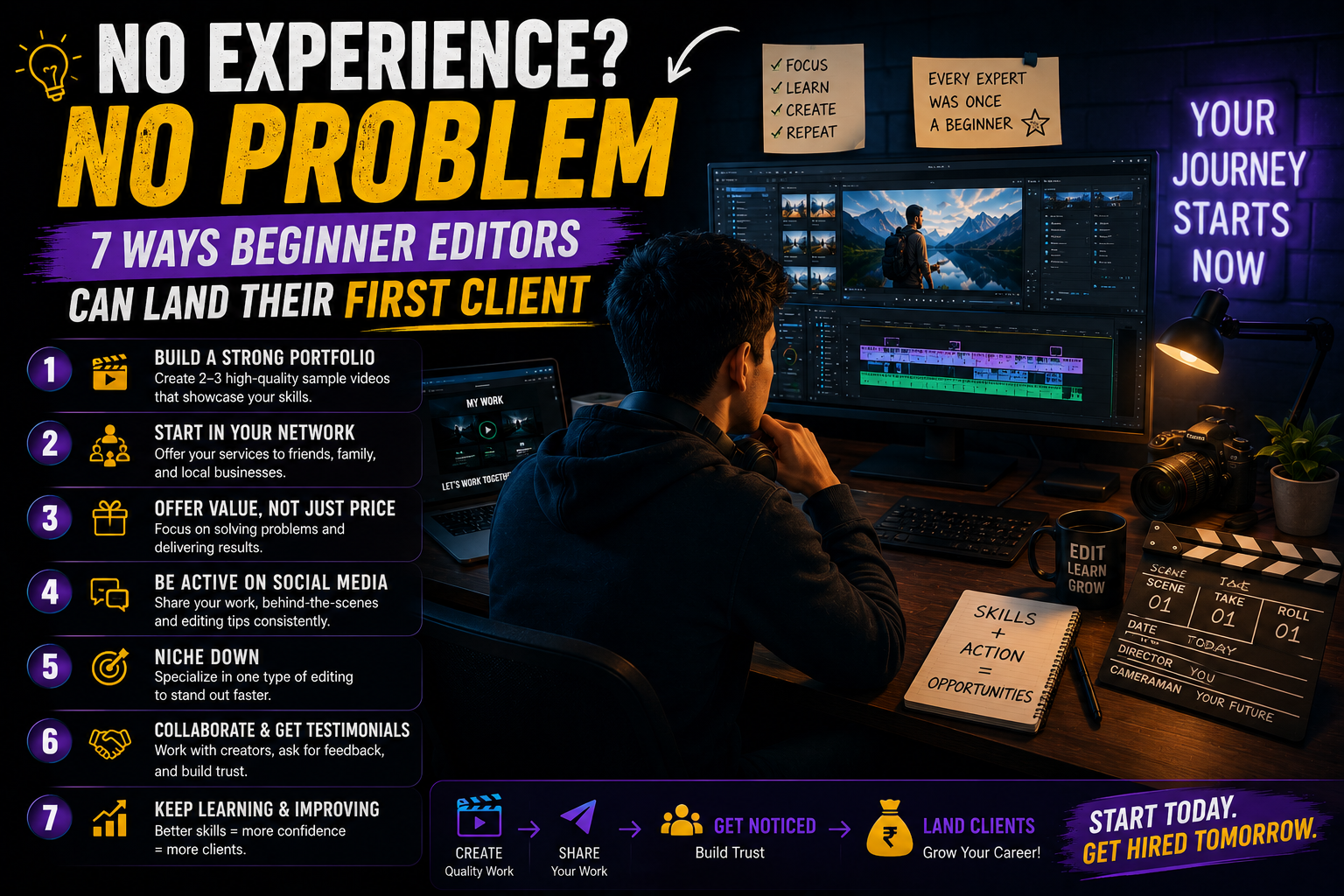
Looking for your first video editing client? Discover 7 practical strategies beginner editors can use to build a portfolio, attract clients, and start earning with video editing.
Breaking out 7 Ways Beginner Editors Can Find Their First Client
Starting your journey as a video editor can feel exciting and overwhelming at the same time. You have learned the basics, mastered editing software, and created a few practice projects—but there’s one question that keeps bothering you:
“How do I get my first client?”
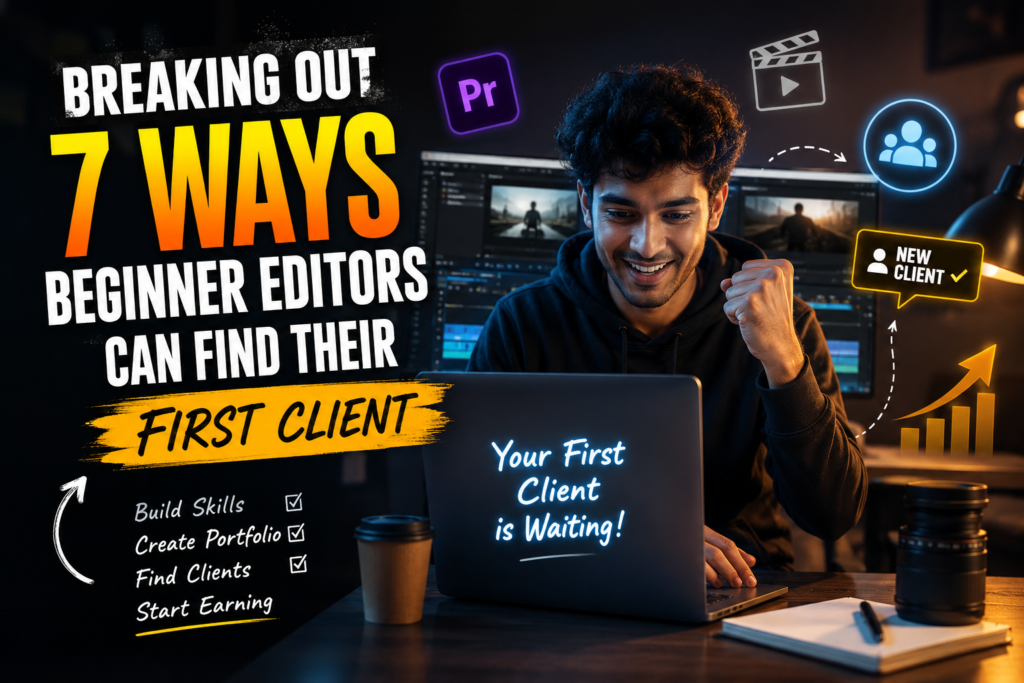
The one piece of positive news is that every successful editor started exactly where you are today. From scratch, gathering everything in one place. Finding your first client isn’t about having years of experience; it’s about the way you showcase your skills, build trust, and put yourself where opportunities exist.
Here are seven practical ways to land your first editing client and kickstart your freelance or professional editing career.
1. Build a Small Portfolio Before You Start Pitching
Clients don’t expect beginners to have dozens of paid projects. Rather, they just want the proof that you can edit. So create 5–10 short editing samples using:
- Travel footage
- Product videos
- Cinematic sequences
- Instagram Reels
- YouTube Shorts
Experiment with different editing styles such as storytelling, fast-paced cuts, motion graphics, and color grading. Because a strong portfolio instantly builds credibility—even if none of the work is paid.
2. Offer Free or Discounted Work Strategically
Your first project is often your biggest stepping stone. Instead of waiting for paid opportunities, offer to edit videos for:
- Local businesses
- Friends with YouTube channels
- Small creators
- Startups
- College clubs
Here, the goal isn’t to work for free forever. It’s to gain some real-world experience, client testimonials, portfolio pieces, and most importantly, client confidence in you and your skills.
Once you complete a few quality projects, then you can start charging for your services.
3. Use Social Media as Your Portfolio
Today’s clients search Instagram, LinkedIn, and other platforms before hiring editors. Because in this current era social media platforms play a major role in showcasing your talent, skills, and works. So, post consistently by sharing:
- Before-and-after edits
- Editing tips
- Colour grading transformations
- Motion graphic showcases
- Behind-the-scenes editing workflows
Consistency increases visibility and helps potential clients discover your work organically. Remember, your social media profile is your digital resume.
4. Reach Out to Content Creators
Thousands of content creators upload videos every week but struggle with editing consistently. Identify creators whose editing could be improved and send them a personalized message.
Instead of saying, “I’m a video editor. Can I work for you?”
Try something more valuable: “I noticed your latest reel. I created a sample edit showing how it could have better pacing and captions. I’d love to help with future content if you’re interested.”
Offering value first dramatically increases your chances of getting noticed.
5. Join Freelance Platforms
Freelance websites are competitive, but they remain one of the fastest ways for beginners to secure projects. Create a professional profile that includes:
- A compelling introduction
- Your editing niche
- Portfolio links
- Editing software expertise
- Client-focused descriptions
Rather than applying for every job, focus on opportunities that closely match your skill level. Quality proposals often outperform quantity.
6. Network Within Editing Communities
Many editing opportunities come through referrals rather than job postings. So it’s a great thing to join communities on:
- Discord
- Facebook Groups
- Editing forums
Participate in discussions, answer questions, share your work, and build genuine relationships. People are more likely to recommend editors they know and trust.
Networking isn’t about selling yourself every day—it’s about becoming visible in the right communities.
7. Keep Improving While Searching
Many beginners stop learning once they start looking for clients. The most successful editors continue improving every week by learning:
- Advanced transitions
- Motion graphics
- Sound design
- Storytelling
- Colour correction
- AI-powered editing tools
Each new skill increases your value and helps you stand out from other beginner editors. Remember, your first client is only the beginning. Continuous learning keeps the opportunities coming.
Final Thoughts
Finding your first editing client takes persistence, consistency, and confidence. Don’t wait until you feel “ready.” Start building your portfolio, showcase your work online, connect with creators, and keep sharpening your skills.
Every project—big or small—helps you build credibility and opens the door to better opportunities. Success in video editing isn’t reserved for professionals with years of experience. It’s earned by those who keep creating, learning, and putting themselves out there.

Ready to Become a Professional Video Editor?
At Plan At B, we help aspiring editors transform their creativity into real career opportunities through practical, industry-focused training. Learn the latest editing techniques, build an impressive portfolio, and gain the confidence to work with real clients.
Join Plan At B today and take the first step toward building a successful career in video editing. Your first client could be closer than you think.