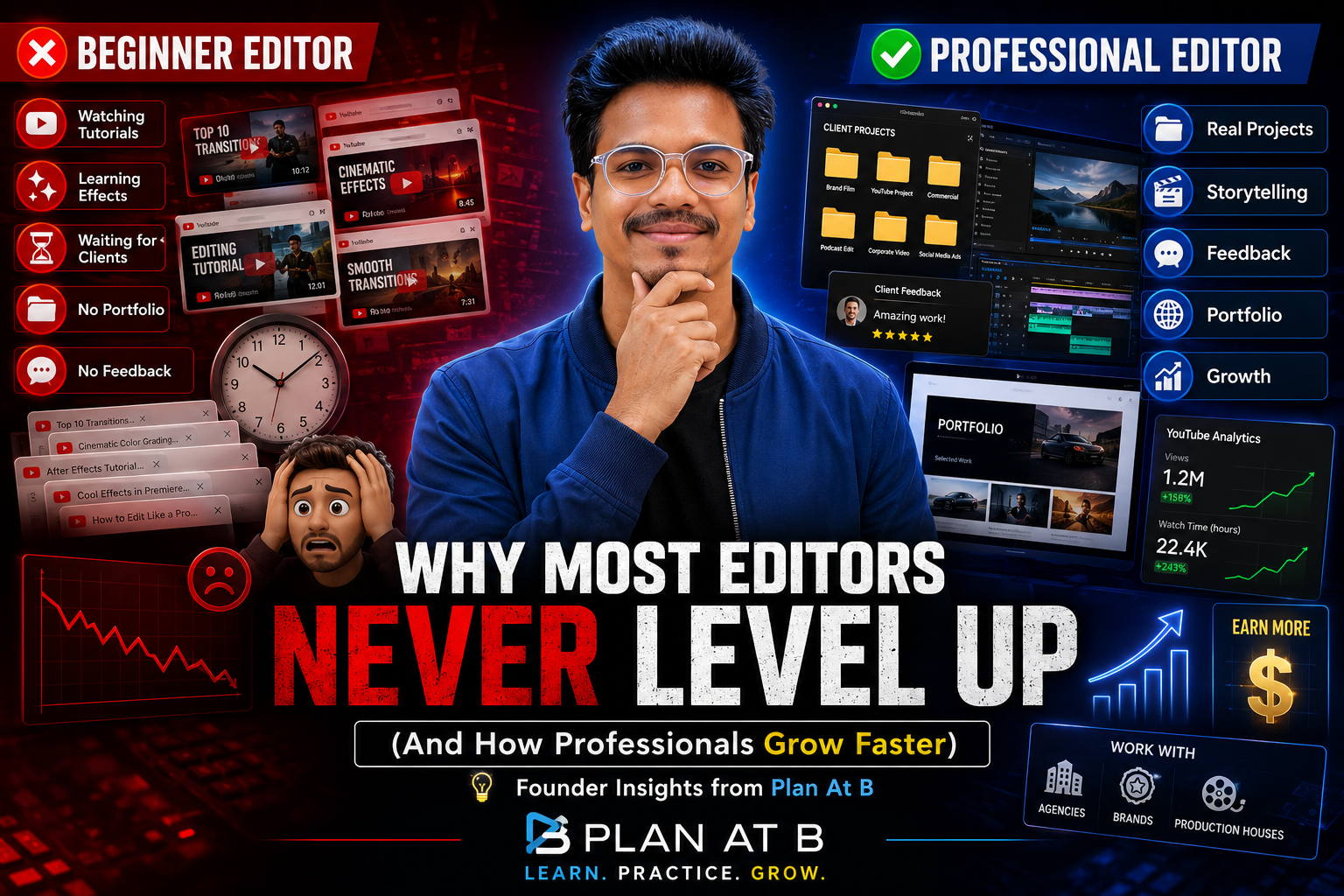
Founder Insights from Plan At B
Every year, thousands of aspiring video editors download editing software, watch tutorials, and dream of turning their creativity into a successful career. Yet, most never move beyond the beginner stage. Not because they lack talent. Not because the industry is too competitive. And certainly not because there aren’t enough opportunities.
But the real reason is far simpler and far more common. They get stuck in a cycle of learning without growing.
As someone who has worked with aspiring creators and observed hundreds of editing journeys, I’ve noticed a pattern. The editors who progress aren’t necessarily the most talented. They’re the ones who develop the right habits, mindset, and approach to learning.
If you’ve been editing for months or even years but still feel like you’re not advancing, this blog is for you.
The Tutorial Trap
One of the biggest mistakes beginner editors make is believing that more tutorials equal more progress. They spend hours watching:
- Editing hacks
- Transition tutorials
- Effects breakdowns
- Trending reels
- Software tips
While tutorials are valuable, they can create a false sense of improvement. Watching someone edit is not the same as editing yourself.
Many editors become excellent consumers of content but struggle when faced with a blank timeline and a real project. Growth happens when knowledge is applied, not just collected.
Focusing on Effects Instead of Storytelling
Most beginners become obsessed with transitions, animations, and visual effects. While these skills are useful, they aren’t what make videos memorable. Professional editors understand something beginners often overlook:
People remember stories, not effects.
A simple edit with strong pacing, emotion, and structure will almost always outperform a flashy edit with no clear narrative. The best editors aren’t just software operators.
They’re visual storytellers. If you want to level up, spend less time searching for the latest transition pack and more time understanding audience psychology, storytelling, and content flow.
Editing Without Feedback
Imagine trying to improve at a sport without a coach. You might practice every day, but you’ll continue repeating the same mistakes. Video editing works the same way. Many aspiring editors work in isolation.
They edit, they export, they post, and they repeat. But they rarely receive constructive feedback. Without feedback, growth becomes slow and unpredictable. Professional improvement happens when someone can identify:
- Weak pacing
- Poor cuts
- Audio issues
- Storytelling gaps
- Viewer retention problems
This is one reason mentorship and structured learning environments accelerate progress significantly.
Avoiding Real Projects
Many beginners wait until they feel “ready” before taking on actual work. The problem? That moment rarely arrives. Real growth begins when you edit projects with real objectives, deadlines, and expectations. Whether it’s:
- A YouTube video
- A client project
- A promotional reel
- A documentary edit
- A brand campaign
Each project teaches lessons that tutorials never can. Experience remains one of the most powerful teachers in creative careers. The sooner you start working on meaningful projects, the faster your skills evolve.
Chasing Software Instead of Skills
Every year, a new editing tool becomes popular. One year it’s Premiere Pro. Next is CapCut. Then another AI-powered platform enters the conversation. Many editors spend more time switching tools than mastering editing itself.
Here’s an important truth: the clients don’t hire you because you know software. They hire you because you can solve creative problems; do storytelling; and know pacing, visual communication, and, most importantly, audience engagement.
These skills remain valuable regardless of which software is trending. The best editors focus on fundamentals first and tools second.
Treating Editing as a Hobby Instead of a Profession
This is perhaps the biggest difference between beginners and professionals. Beginners edit when they feel motivated. Professionals edit consistently. Beginners wait for inspiration. Professionals build systems. Beginners consume content endlessly. Professionals create relentlessly.
The editors who succeed understand that improvement is the result of disciplined practice over time. They treat editing like a craft that deserves commitment and continuous learning.
What Actually Helps Editors Grow?
After observing successful creators and editors, the path becomes surprisingly clear. Progress comes from constant practice, working on real-world projects, seeking constructive feedback, learning storytelling principles, building a portfolio, understanding audience behavior, and staying curious and adaptable.
Most importantly, it comes from embracing discomfort. Growth often begins where comfort ends.
The Plan At B Perspective
At Plan At B, we believe that the future belongs to creators who blend technical skills with creative thinking. Learning software is important, but software alone doesn’t build careers.
That’s why our approach focuses on helping budding editors develop practical experience, storytelling abilities, industry awareness, and portfolio-ready work that prepares them for real-life opportunities.
Because the goal isn’t just to learn editing. The goal is to become an editor people want to hire.
Final Thoughts
If you’re feeling stuck, remember that your progress isn’t measured by how many tutorials you’ve watched, how expensive your software is, or how many affects you know.
Rather, it’s determined by what you create, what you learn from each project, and how consistently you improve. The gap between a beginner and a professional editor is often smaller than it appears.
The difference is that professionals keep moving forward while beginners wait for the perfect moment. So just start creating, start learning from real work. And most importantly, keep showing up. That’s where growth happens.
Ready to Move Beyond Beginner-Level Editing?
At Plan At B, we help ambitious creators enhance their editing skills into real-world opportunities through practical learning, portfolio development, and industry-focused mentorship.
Explore our programs and take the next step toward becoming a confident, career-ready video editor.