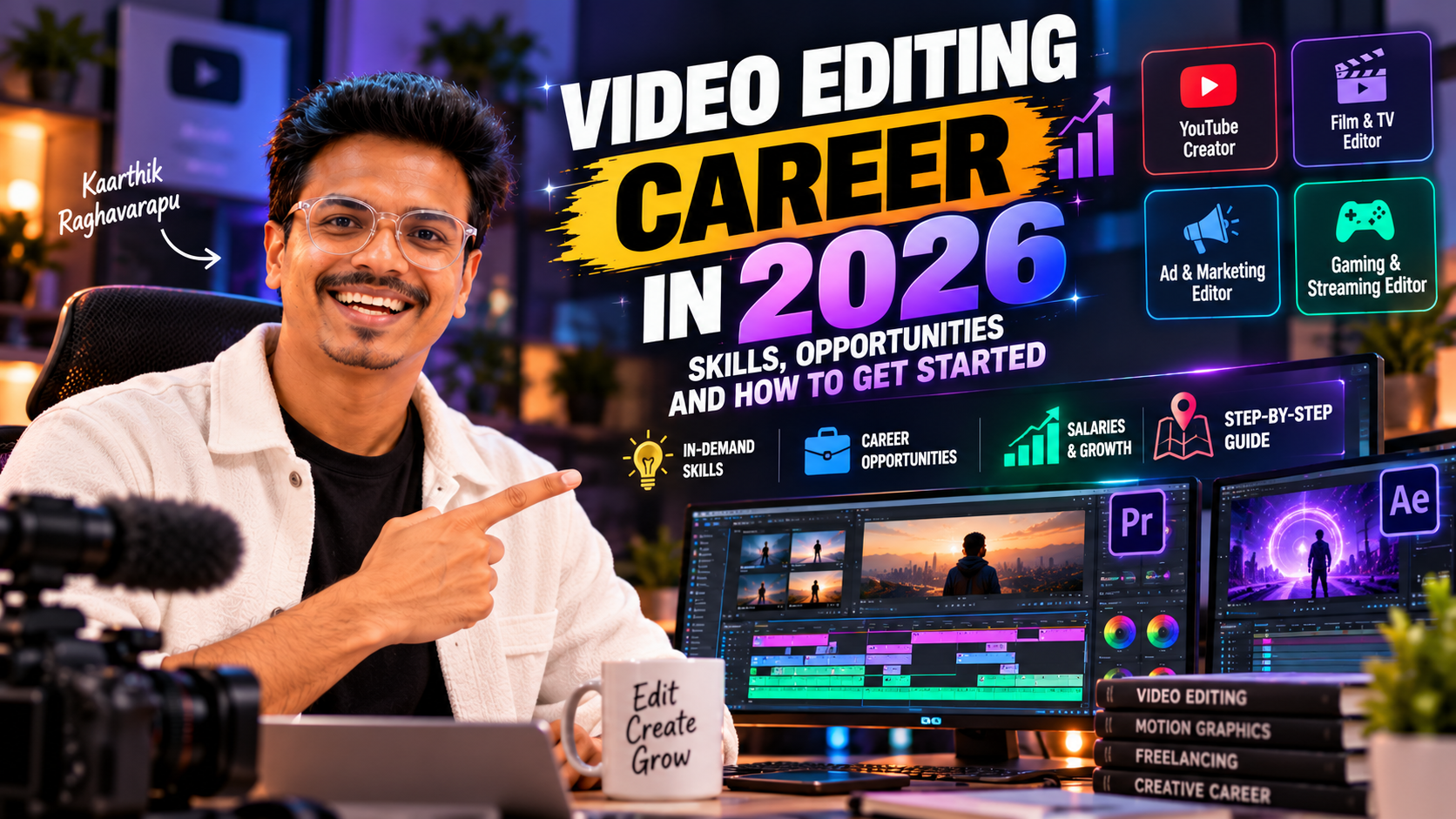
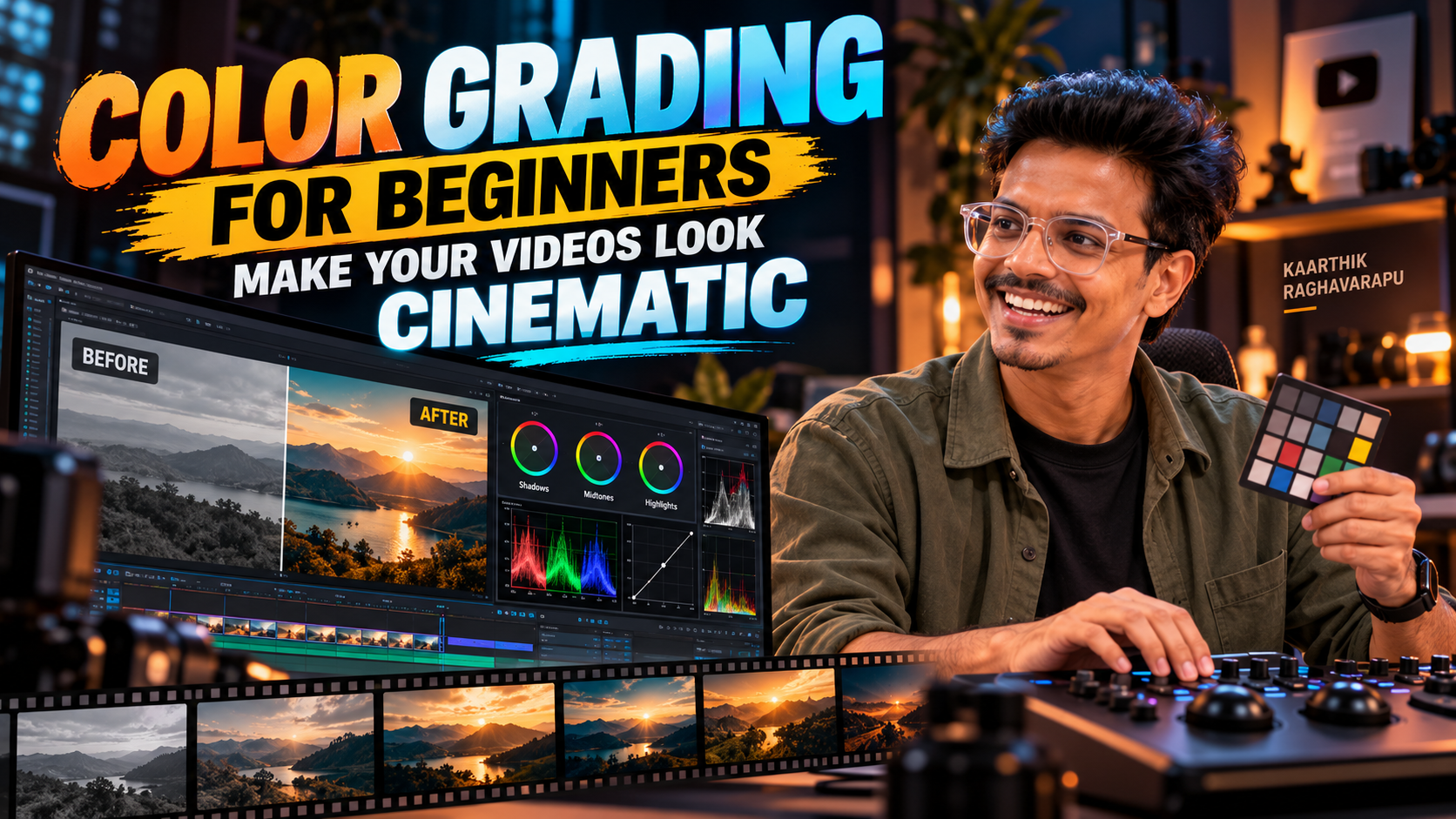
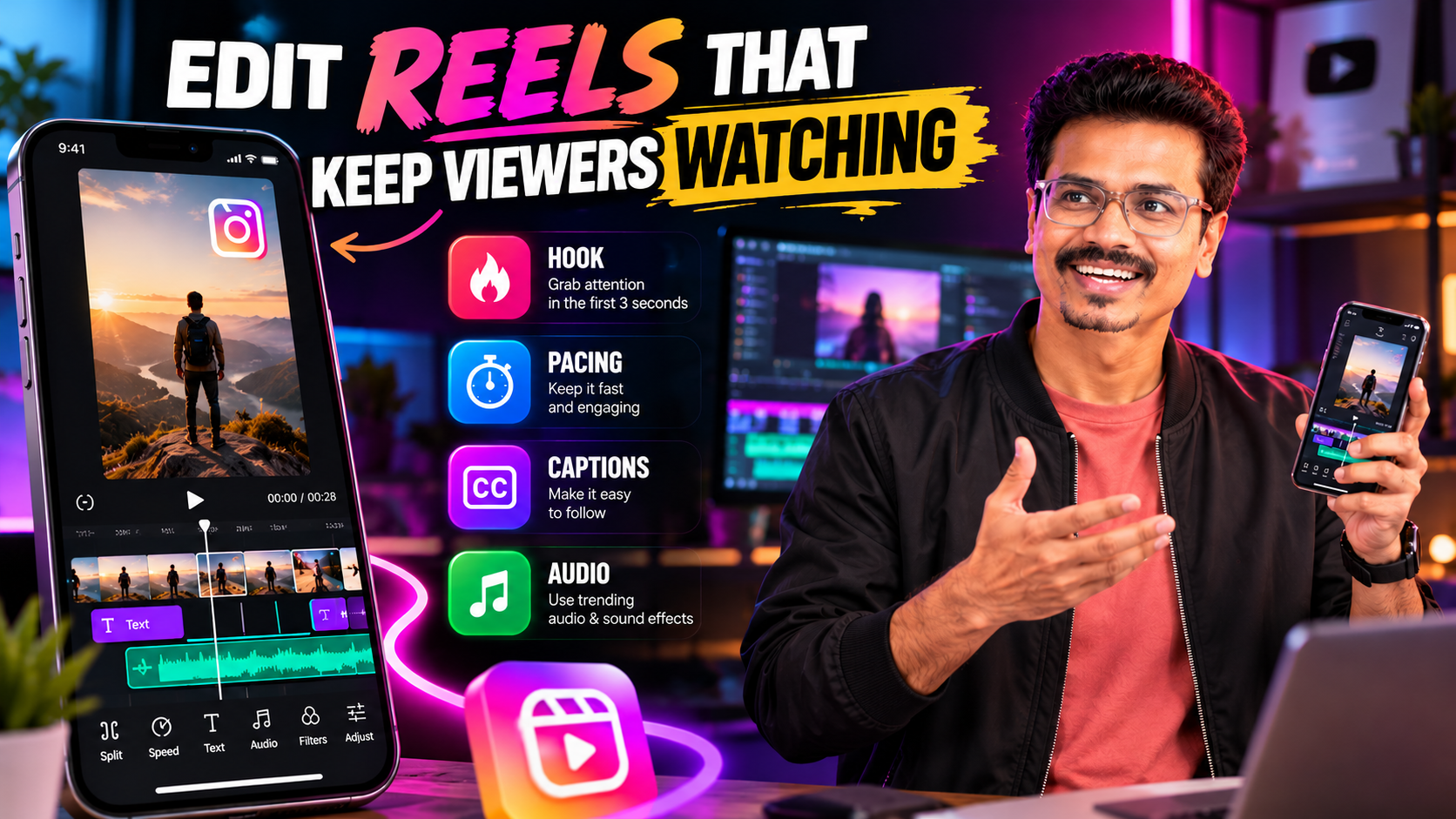
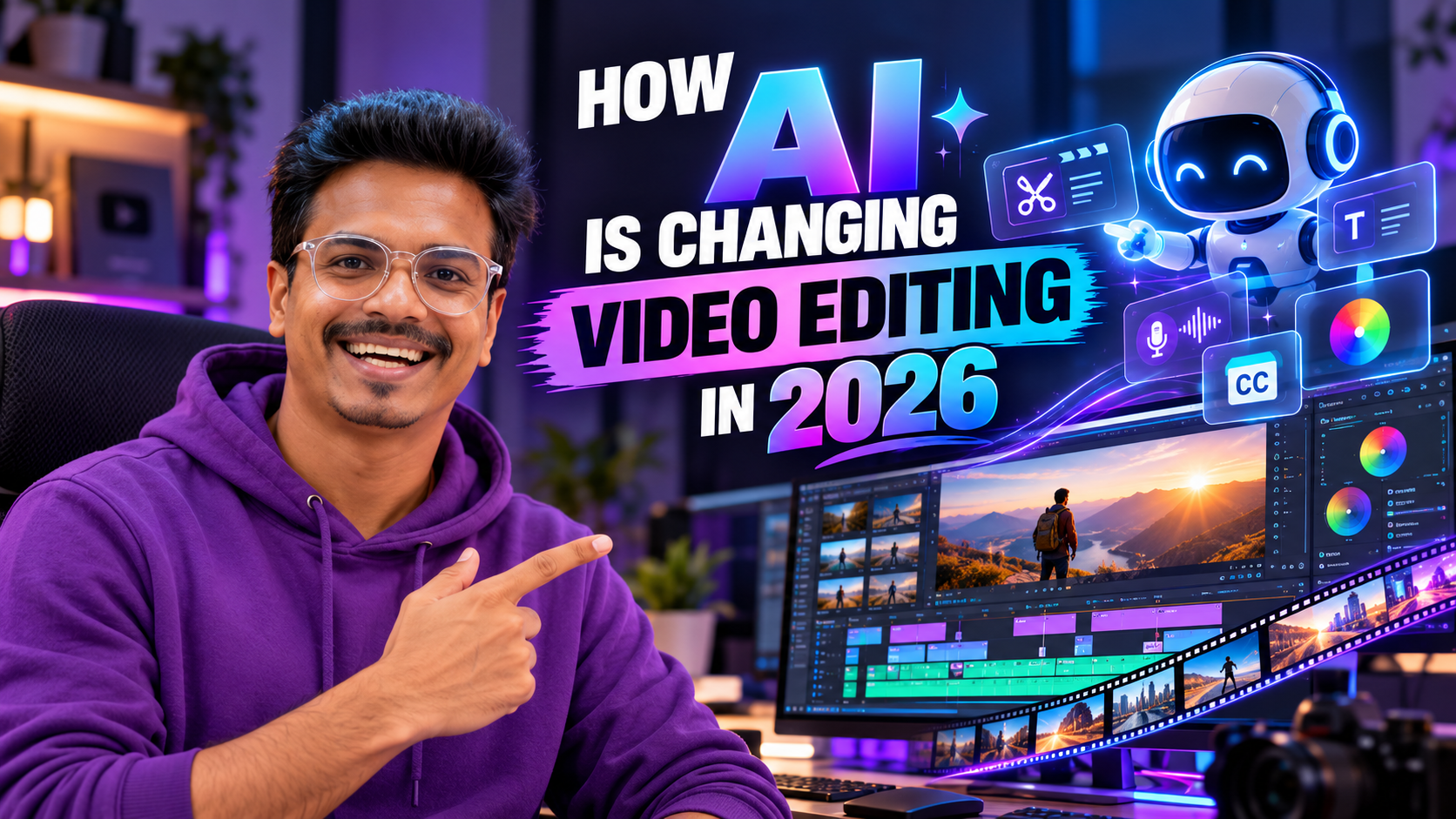
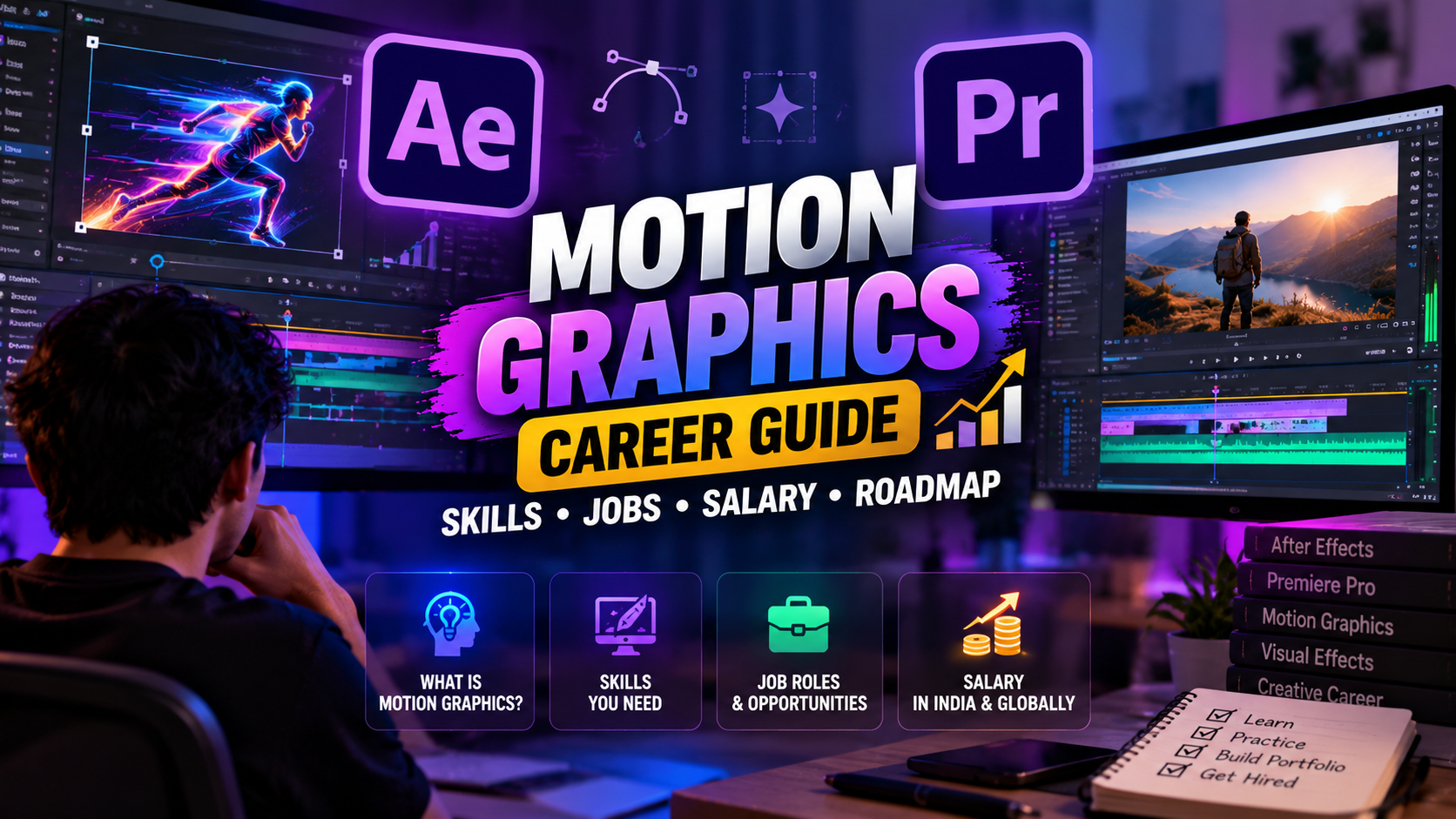
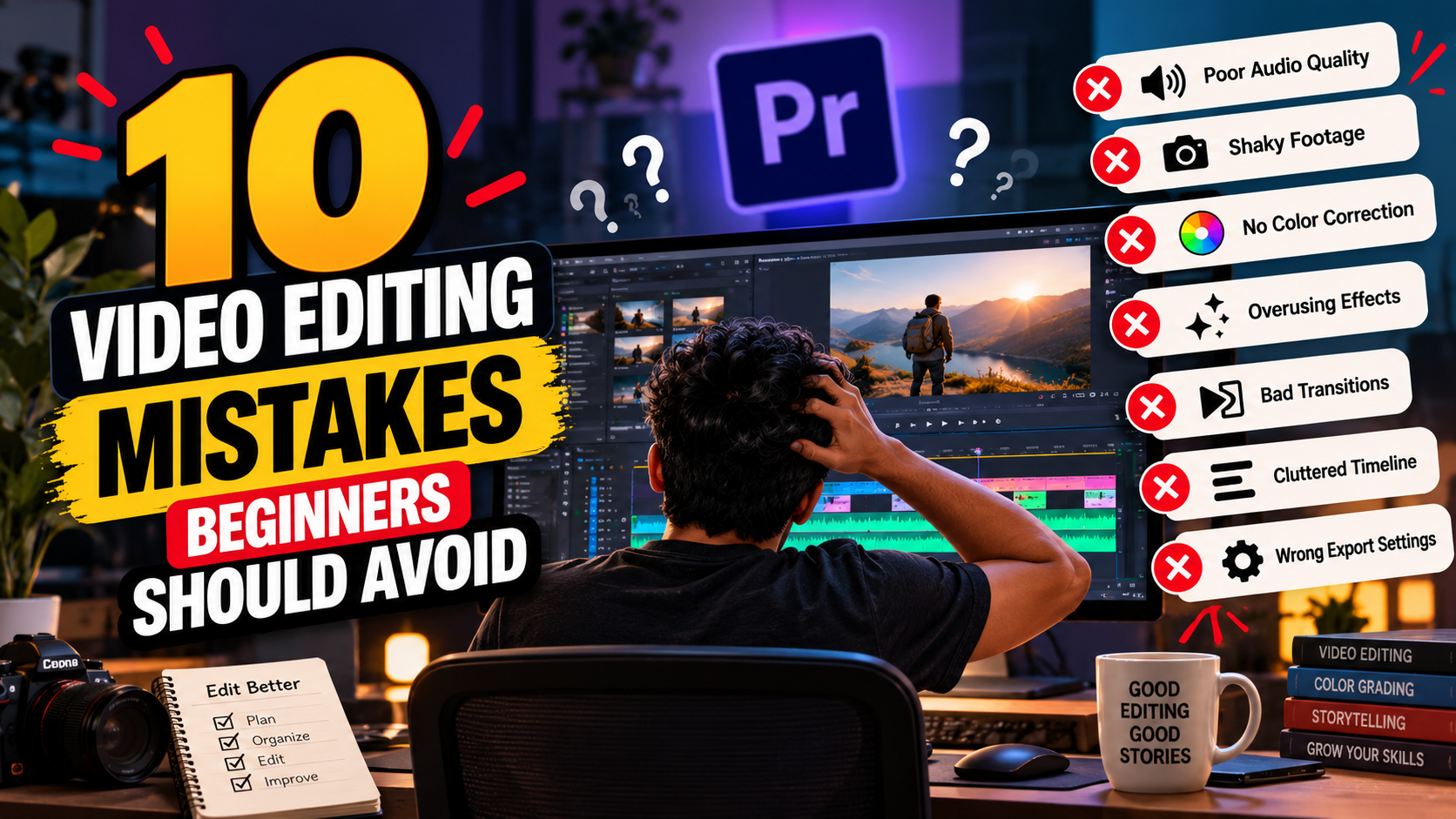
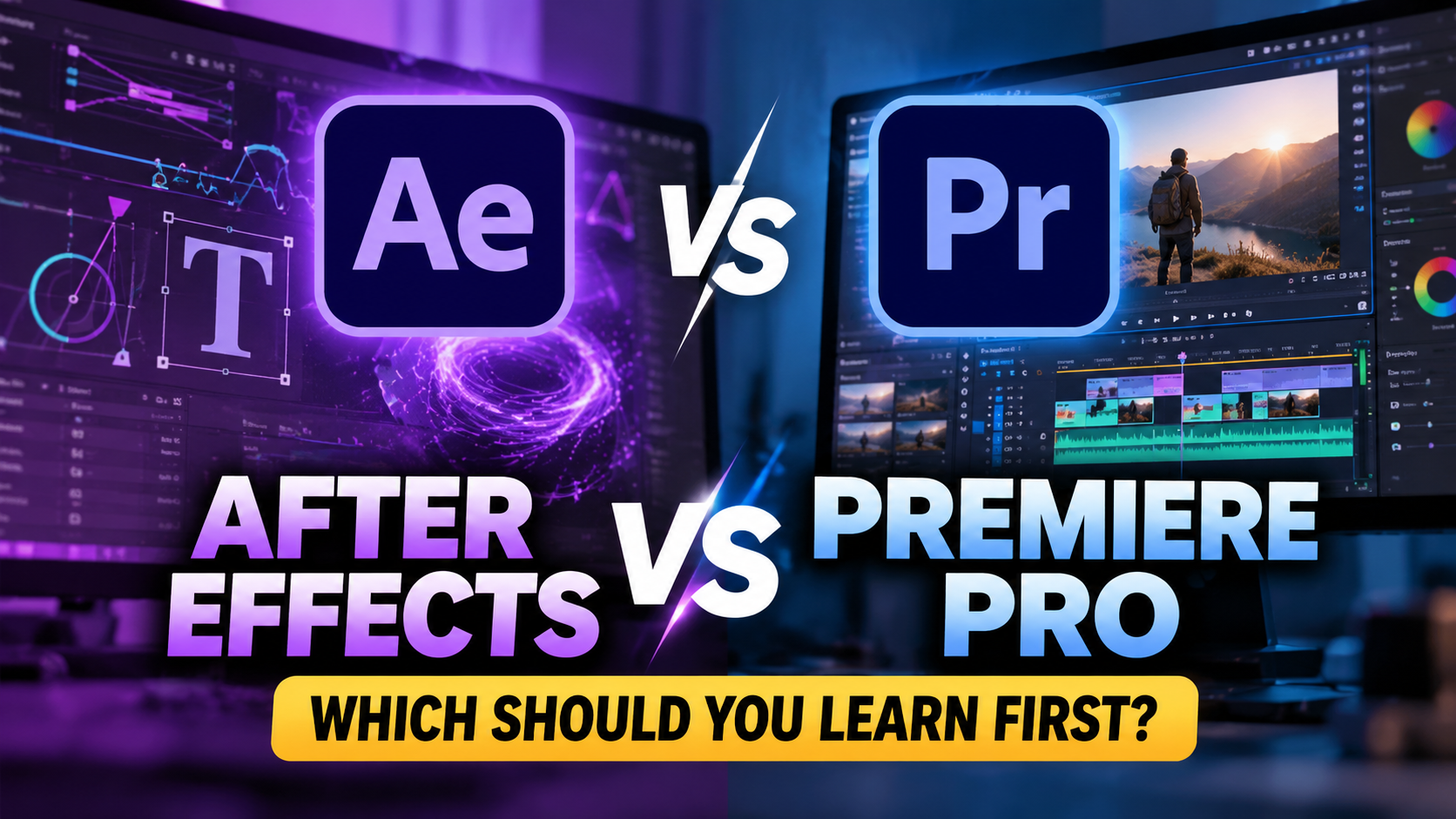
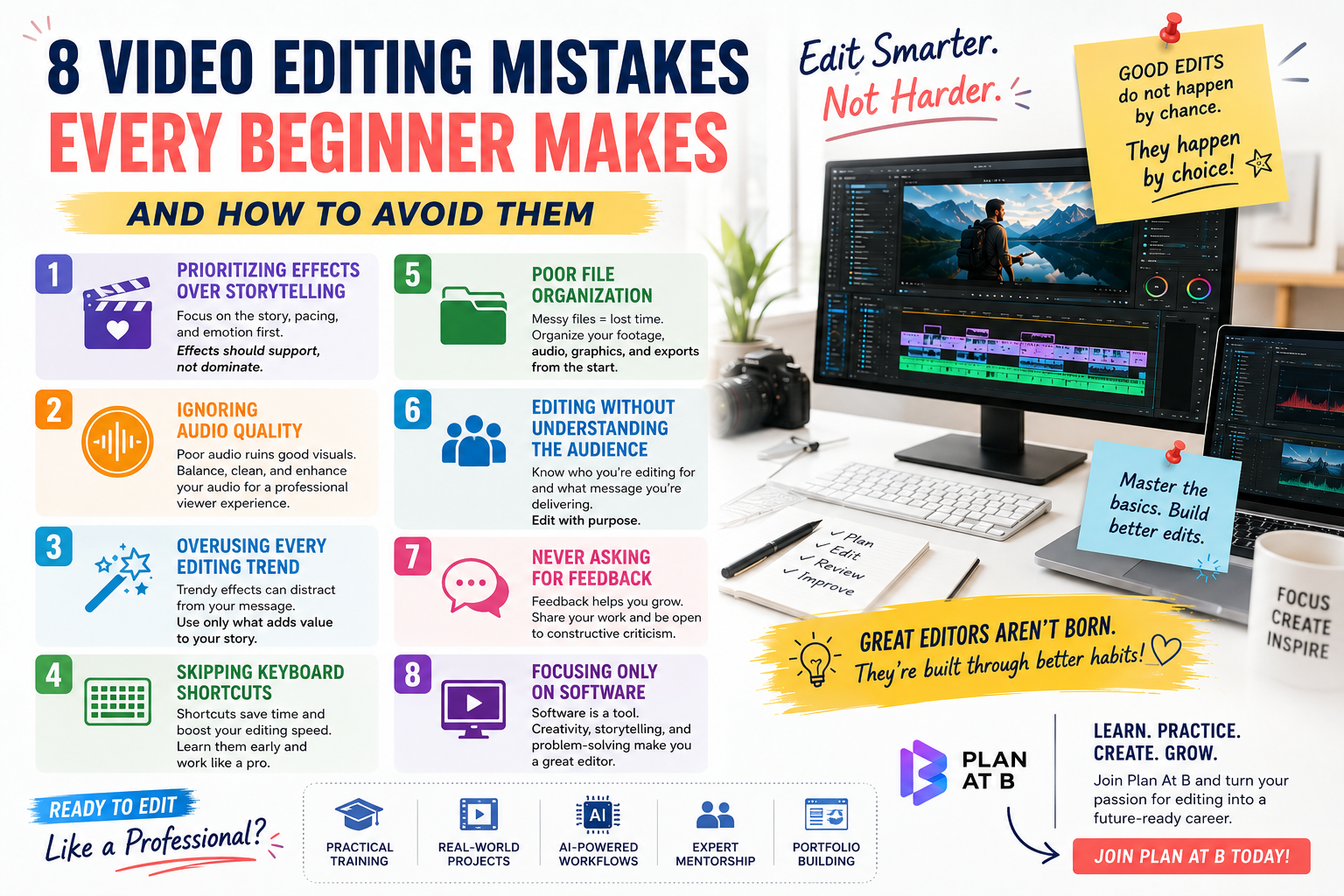
Introduction Video content is used across entertainment, advertising, education, e-commerce, social media, and many other fields. From YouTube videos and product advertisements to online courses and corporate presentations, organizations use video to communicate information, promote products, and tell stories. Behind many of these videos is an editor who selects footage, shapes the narrative, improves sound, adjusts visuals, and prepares the final content for its intended audience. If you enjoy creativity, technology, and storytelling, video editing may be a career worth exploring. 1. What Does a Video Editor Do? A video editor transforms raw footage and other media assets into a finished video. Responsibilities may include: Reviewing and organizing footage Selecting the best takes Arranging clips into a coherent sequence Improving pacing and storytelling Synchronizing dialogue and music Adding titles, graphics, and subtitles Correcting colors and exposure Applying transitions and visual effects Incorporating client feedback Exporting and delivering the final video 2. Explore Different Video Editing Career Paths YouTube Video Editor Edit long-form videos, interviews, podcasts, tutorials, and creator content. Work may involve pacing, graphics, subtitles, sound design, and supporting footage. Social Media Video Editor Create short-form videos, Reels, Shorts, promotional clips, and platform-specific content for creators and businesses. Motion Graphics Designer Create animated titles, logo animations, infographics, explainer videos, and visual elements using tools such as Adobe After Effects. Film and Commercial Editor Work on narrative projects, advertisements, promotional films, documentaries, or productions that require detailed storytelling and collaborative post-production. Freelance Video Editor Work independently with clients, manage project requirements, set prices, organize deadlines, and build ongoing professional relationships. Each path requires a different combination of technical, creative, and communication skills. 3. Essential Skills for a Video Editing Career Editing fundamentals Understand cutting, trimming, continuity, timeline navigation, and how to arrange footage into a coherent sequence. Storytelling and pacing Learn how shot selection, timing, music, and visual structure influence the viewer's experience. Audio editing Understand dialogue clarity, music balance, noise reduction, and sound effects. Color correction and grading Learn to correct exposure, balance white balance, match shots, and create an appropriate visual style. Motion graphics Develop the ability to create titles, animated text, graphics, and simple visual effects. File management Organize media, manage project versions, maintain backups, and prepare deliverables correctly. Communication Understand briefs, clarify expectations, respond to feedback, and manage revisions professionally. You do not need to master every skill before starting. Build a solid foundation and expand your abilities according to the work you want to pursue. 4. Which Software Should You Learn? Adobe Premiere Pro is a practical choice for learning professional video editing workflows. Adobe After Effects can help you expand into animation and motion graphics. Depending on your goals, other editing applications may also be suitable. Focus on understanding editing principles rather than memorizing every feature of a particular program. A strong editor should be able to explain why a cut works, why a shot belongs in the sequence, and how the final video supports its intended purpose. 5. Is a Degree Required to Become a Video Editor? Requirements vary by employer, role, and industry. Some employers prefer a relevant degree or formal training, while other opportunities place substantial emphasis on demonstrated skills, portfolio quality, and practical experience. Freelancers may have more flexibility regarding formal qualifications, but they still need to demonstrate that they can deliver work that meets client expectations. Regardless of your educational background, a portfolio containing relevant, well-executed projects can help you show what you are capable of creating. Check individual job requirements rather than assuming every role follows the same criteria. 6. Build a Portfolio That Demonstrates Your Skills A portfolio allows employers and clients to assess your editing ability without relying entirely on your resume. Start with three to six strong samples that match your intended career path. An educational Reel with clear captions A product advertisement A talking-head video with supporting footage A cinematic montage A short promotional video For every project, explain your contribution, the techniques you used, and the decisions you made. If you used stock footage or self-initiated concepts, identify them appropriately. Never claim work or client experience you did not have. 7. How to Find Your First Job or Client For full-time employment Search for video editor and junior video editor roles. Explore creative agencies, production houses, and marketing teams. Review job descriptions to identify recurring skill requirements. Tailor your resume and portfolio to relevant openings. Practise explaining your editing workflow and project decisions. For freelancing Create a professional portfolio page. Approach creators and businesses with relevant services. Use freelance platforms where appropriate. Share work consistently on suitable professional channels. Build relationships through reliable delivery and communication. Be prepared to learn from rejections and portfolio feedback. Improving your work and refining your applications are normal parts of the process. 8. Can Video Editing Become a Full-Time Career? Video editing can be pursued as a full-time job, freelance service, or part of a broader creative role. Opportunities and income vary according to location, skill level, specialization, experience, industry demand, and client relationships. Rather than relying on broad salary promises, research current job listings in your target location and compare their requirements and compensation. For freelancing, consider expenses, project time, revisions, and the consistency of available work. 9. How AI Is Influencing Video Editing Careers AI-assisted tools can speed up selected tasks, including transcription, subtitle generation, audio cleanup, footage discovery, and some repetitive editing operations. Understanding these tools can help you develop efficient workflows. Understand AI-assisted editing features. Review generated captions and transcripts. Maintain visual and audio quality. Apply creative judgment. Protect client assets and confidential material. Understand usage rights for third-party and generated content. 10. A Practical 90-Day Learning Roadmap Days 1–30: Build the foundation Learn the editing interface and timeline. Practise cuts, trims, and transitions. Understand audio, basic color correction, and exports. Complete two short editing projects. Days 31–60: Create portfolio projects Produce a Reel, a YouTube-style edit, and a promotional video. Practise captions, sound design, and visual consistency. Learn introductory motion graphics. Review your work and improve weaker sections. Days 61–90: Prepare for opportunities Select your strongest portfolio pieces. Create a professional portfolio page. Prepare a resume and project descriptions. Apply for relevant jobs or contact suitable freelance prospects. Continue practising based on feedback. This plan is designed to establish momentum, not guarantee employment within 90 days. Progress depends on your starting level, practice time, project complexity, and the opportunities available to you. 11. Common Mistakes to Avoid When Starting Your Career Learning software without completing projects. Depending entirely on downloaded templates. Ignoring audio and storytelling. Applying for roles without reviewing their requirements. Presenting unfinished work as professional-quality output. Underestimating the time required for revisions. Stopping learning after becoming comfortable with one application. The strongest way to improve is to complete projects, review your results honestly, and keep developing the skills relevant to your goals. Start Building Your Creative Career With Plan At B At Plan At B, we believe aspiring video editors should have opportunities to apply what they learn through practical projects. Our industry-focused training emphasizes editing fundamentals, hands-on assignments, professional workflows, and portfolio development. Whether your goal is to work with creators, join an agency, pursue motion graphics, or build a freelance service, consistent practice is an important part of the journey. Final Thoughts A video editing career is built through a combination of technical skills, creative judgment, practical experience, and professional reliability. You don't need to know everything before beginning. Start with the fundamentals, complete real projects, and gradually develop the abilities required for your chosen path. Your first project may not be perfect. But every completed project can bring you closer to the editor you want to become. Start learning, keep creating, and take your next step with Plan At B.